By Thinkman · February 7, 2026

| ENV BURN | AI MATURITY |
|---|---|
| 73/100 → 72/100 ▼ | AGI 30 → AGI 30 |
The Soil That Remembered Rain
2044 — Iowa
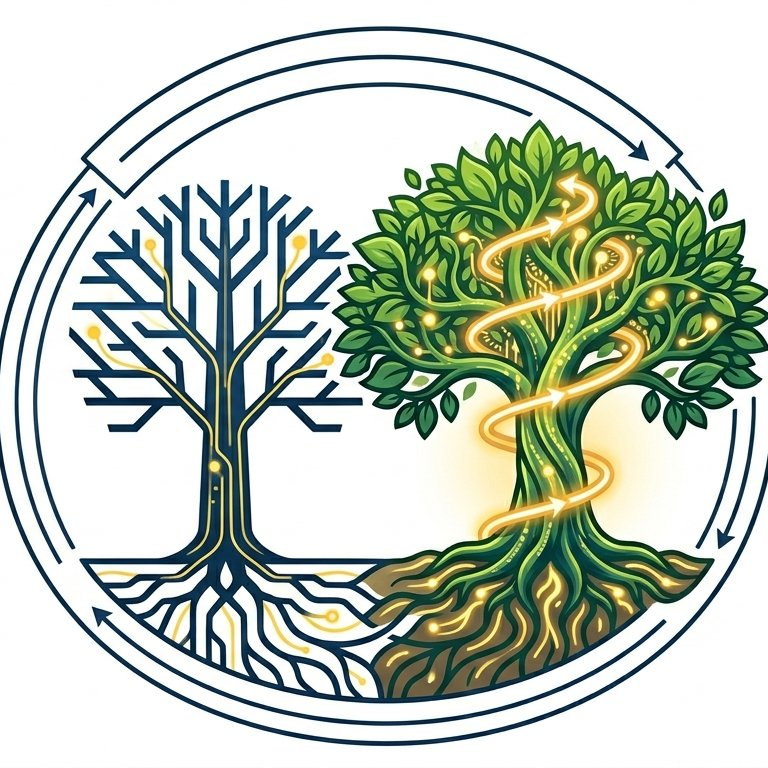
2044: Hayes farm topsoil deepens, soil remembers
[HAYES FAMILY — Travis, 26 — Fourth Generation]
The Hayes farm in 2044 was not the farm Dale had inherited. It was the same land. It was transformed soil.
The topsoil on the north forty was now three centimetres deeper than it had been in 2021. The mycorrhizal network had recovered to a density that the soil scientists called 'functionally equivalent to pre-intensive-agriculture baseline' — a phrase that meant, in practical terms, that the soil was alive in the way soil is supposed to be alive, which is to say continuously and invisibly and with a complexity that no individual intervention had produced and that only the accumulation of patient years of not-destroying had allowed.
Travis walked the fields at dawn the way his father had walked them, the way his grandfather had, the way the great-great-grandfather who first broke this ground in 1887 had walked different fields in a different world with the same quality of attention that farmers bring to land they intend to keep. The attention was not romantic. It was practical. He was looking for things: the tilt of a stalk, the colour of a leaf, the presence of a particular beetle. The AI system sent him daily summaries. He read them. He walked anyway.
'The system is usually right,' he told his sister Claire, who was visiting from the university.
'Usually,' she said.
'There was a corner in the east forty last September. System said optimal. Field said something else. Couldn't say what — just wrong.'
'What did you do?'
'I walked it. Found a compaction layer two feet down that the sensors hadn't caught. System updated its model.'
Claire made a note. This was the kind of human-AI collaboration that her research programme was documenting: not the replacement of human knowledge by machine knowledge, but the iterative improvement of each by the other, the way river and riverbed shape each other across centuries.
Dale was in his seventies. He worked the farm two mornings a week now, advisory capacity, which he described as 'glorified walking.' Susan kept the bees. There were eleven hives now, producing honey that Mila Petrov had written about in an article connecting bee colony health to the mycorrhizal recovery in the surrounding fields. The article had been read by forty thousand people. Dale had read it once. He had not told Susan. She had told him.